

Troubleshooting Unreachable Device Alerts
Overview
An unreachable device is a Cisco Meraki device that was previously online but has stopped communicating with the Meraki cloud. This article explains the steps to troubleshoot an unreachable device and restore it to an online state.
Alerts
The Meraki dashboard triggers an alert when the system detects a problem in the communication path between the node and the Meraki cloud. You can find these alerts in the following areas of the dashboard. Select the unreachable device link within the alert to open the suggested actions:
- Product page: A banner displaying the unreachable device information appears under the device name.
- Top navigation bar: The notification (bell) icon displays an unread notification for all alerts, including suggested actions for unreachable devices.

- Alerts: You can also find an alerts page under both the Assurance and Organization tabs. This page displays all types of alerts, including alerts for unreachable devices.


Troubleshooting unreachable device issue
Complete the following steps to troubleshoot an unreachable device and restore connectivity.
Troubleshooting steps
To access the guided troubleshooting workflow, select See details in the unreachable device banner or select Suggested actions within the alerts under notifications.
Mark each step complete and the next suggested action will automatically expand.

-
Check for outages: On a separate tab, open the Meraki Status page and check whether the page already reports an outage for the device. If the status page reports an outage, continue monitoring the status page for further updates.
-
Check for upstream devices: The system automatically attempts to identify the upstream neighbor of your device.
-
If the system identifies a Meraki device: the device name, current status (for example, Online or Offline), and a hyperlink to the device's page appear. If the upstream device is offline, select the link and follow the suggested troubleshooting steps for that device instead.
-
If the device is not identified or is non-Meraki: The system will prompt you to manually verify the upstream neighbor. Verify the operational status and port activity of the connected upstream device.
-
Packet Capture: If you have access to the upstream neighbor, perform a packet capture to review traffic, regardless of the device type. For a step-by-step guide, refer to the Packet Captures to Troubleshoot Offline Devices article.
-
Collected capture: Select this button if you successfully collected a packet capture. The system prompts you to attach the file when you submit your support case.
-
Can't collect a capture: Select this button if you cannot perform a packet capture on the neighboring device.
-
-
-
Cable test: Review the network cable of the offline device:
-
Verify connection: Ensure the cable is securely connected at both ends and is not physically damaged.
-
Replace if necessary: If you suspect the cable is faulty, replace the cable with a known working cable.
-
Select Verified connection if the cable is secure, or Replaced cable if you replaced it with a new one.
-
-
Check device power: Check the device LED status. A green or rainbow LED indicates the device is on. If the LED is off or red, try a different power source and select the applicable button. If the LEDs remain off, continue to create a support case.
-
LEDs are On
-
LEDs are still OFF
-
Can't Check LEDs
-
-
Access Local Status Page: Check the Meraki Device Local Status Page (LSP) for instructions on how to open the page for each device type.
-
Confirm the device has the correct IP address assigned and that no firewall rules block traffic.
-
Take a screenshot of the connection tab and share it within the case once created.
-
If you cannot open the local status page, indicate so by clicking the below button:
-
Unable to Open LSP
-
-
-
Collect Support Data Bundle (SDB): Download the Support Data Bundle using the instructions in the Using Support Data Bundle article. Save the SDB and attach to the support case, if created.
-
Reboot or reset the device: Rebooting the device deletes all volatile logs and debug information, which prevents the team from performing a root cause analysis. Only complete these steps if you need to restore network connectivity urgently.
-
Reboot the device and wait 15 minutes.
- If the device is still offline, factory reset the device and wait 15 minutes. A factory reset clears any static IP configuration — review the LAN IP section on the node's details page to reconfigure the settings if needed.
-
If the issue persists, collect a new SDB and share the file within the case once created.
-
If you don't want to reboot or reset the device, select the following button:
-
Skipped
-
-
Escalation
Contact Support:
-
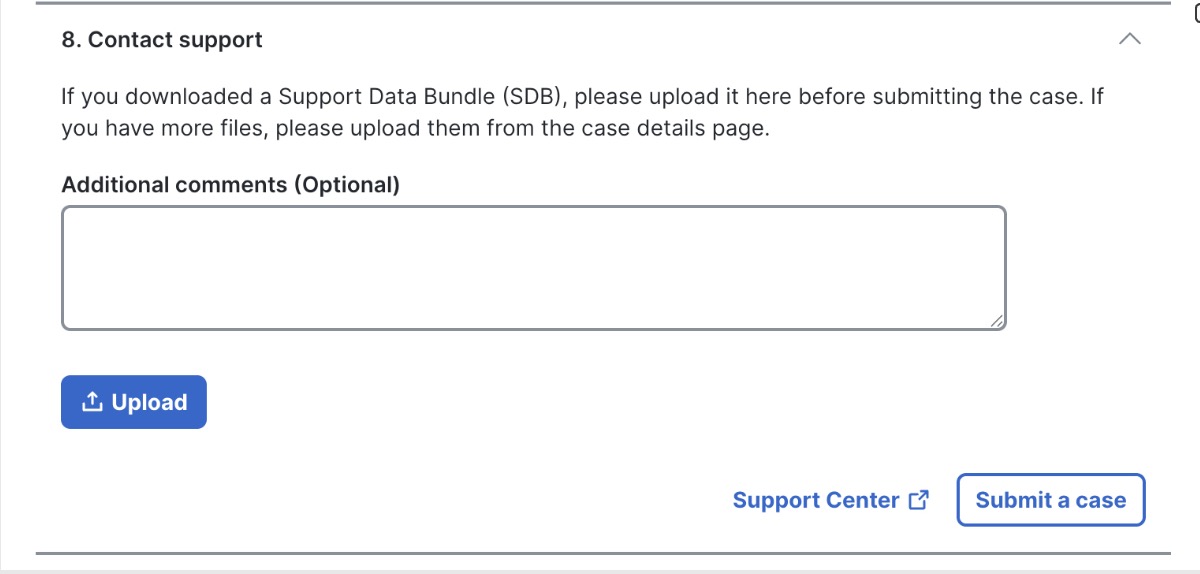
If the device remains offline after completing all suggested actions, create a support case by selecting Submit a case.
-
Use the optional comments section to add relevant troubleshooting notes or context before submitting the case.
-
If Support Data Bundle (SDB) was downloaded during the troubleshooting, upload it before case submission.
-
The case automatically captures all completed troubleshooting steps, so you don't need to repeat the information.
-
After creating the case, use the Upload button in the case details section to attach remaining documentation, such as packet captures.
-
For immediate assistance, use the Call us button to call in with the case details.