

Troubleshooting MT Sensors
Overview
This article guides you through troubleshooting common scenarios that may occur during normal operation of Cisco Meraki MT sensors. The article is divided into troubleshooting steps that apply to all models, followed by model-specific troubleshooting steps.
If your issue is not included in this document or the steps listed do not resolve your issue, contact Cisco Meraki Support for further assistance.
Troubleshooting device power issue
All MT sensor models feature a multi-color LED on the front or top surface. The LED illuminates briefly when the device powers on or when you press the General Purpose button. If the LED does not illuminate after pressing the General Purpose button, the device may not be powering on.
Troubleshooting steps
- Ensure the battery is inserted in the correct direction, as indicated in the battery recess on the device.
- Try a new battery, or power the MT sensor using a USB-C power source, if applicable.
Troubleshooting dashboard connectivity issue
MT sensors require a Meraki MR access point or MV smart camera to act as a network gateway. MT sensors check in to the Meraki dashboard every 20 minutes. A sensor is marked as offline after it misses three consecutive check-ins (three 20-minute check-in periods).
The MT40 sends advertisements every 30 seconds to the dashboard. If the MT40 does not check in for more than 5 minutes, it is marked as offline.
Troubleshooting steps
- Confirm gateway devices meet the following minimum requirements:
- MR access points: Wi-Fi 6-capable or later generation models running MR 27.6+ firmware, or Wi-Fi 5-capable (802.11ac Wave 2) models running MR 28.6+ firmware.
- MV smart cameras: 2nd generation or later models running MV 4.8+ firmware.
- Confirm that IoT Radio (formerly known as BLE) is enabled. IoT Radio is only enabled on MR access points running full power mode (Power over Ethernet (PoE) 802.3at, unless otherwise stated in the MR access point datasheet). MT sensors will not connect if the access point is running in low power mode.
- Confirm the MT sensor is added to the same network as the MV or MR gateway.
- Trigger an event for the MT sensor using one of the following methods:
- MT10, MT12, MT20: Press the General Purpose button on top of the device.
- MT20: Bring the sensor bar within 0.1–2.0 centimeters of the magnet symbol.
- Move the MT sensor closer to a known-working MR or MV gateway. MT sensors contact the dashboard via BLE, so their range can be affected by the local 2.4 GHz wireless environment.
LED indicator reference

To conserve battery life, the LED does not remain on continuously. The exact position of the LED indicator may vary from device to device.
- Rainbow: MT is initializing or looking for a gateway.
- Solid green (for three seconds): connected to a gateway.
- Solid amber (for three seconds): MT could not find a gateway to connect.
- Flashing green: MT is upgrading its firmware.
- Flashing amber: MT is running on a low battery.
Troubleshooting MT10 temperature and humidity issue
The MT10 temperature and humidity sensors are internal to the device. If the MT10 is mounted in a location with limited airflow, the sensor may take an extended period of time to register a large temperature or humidity change.
Troubleshooting steps
1. Increase airflow to the opening in the housing located adjacent to the USB-C port on the bottom of the device.
For more information about the charts, refer to the MT Psychrometric Chart document.
Troubleshooting MT12 water leak cable issue
The MT12 water leak sensor may report cable disconnection or false wet detections. The two common issues and their troubleshooting steps are addressed below.
Troubleshooting steps
For cable disconnected
Ensure the cable is fully seated in the cable port. You should hear an audible click when the cable fully seats, with nearly no space between the ground sheaths of the male and female ends of the connectors.
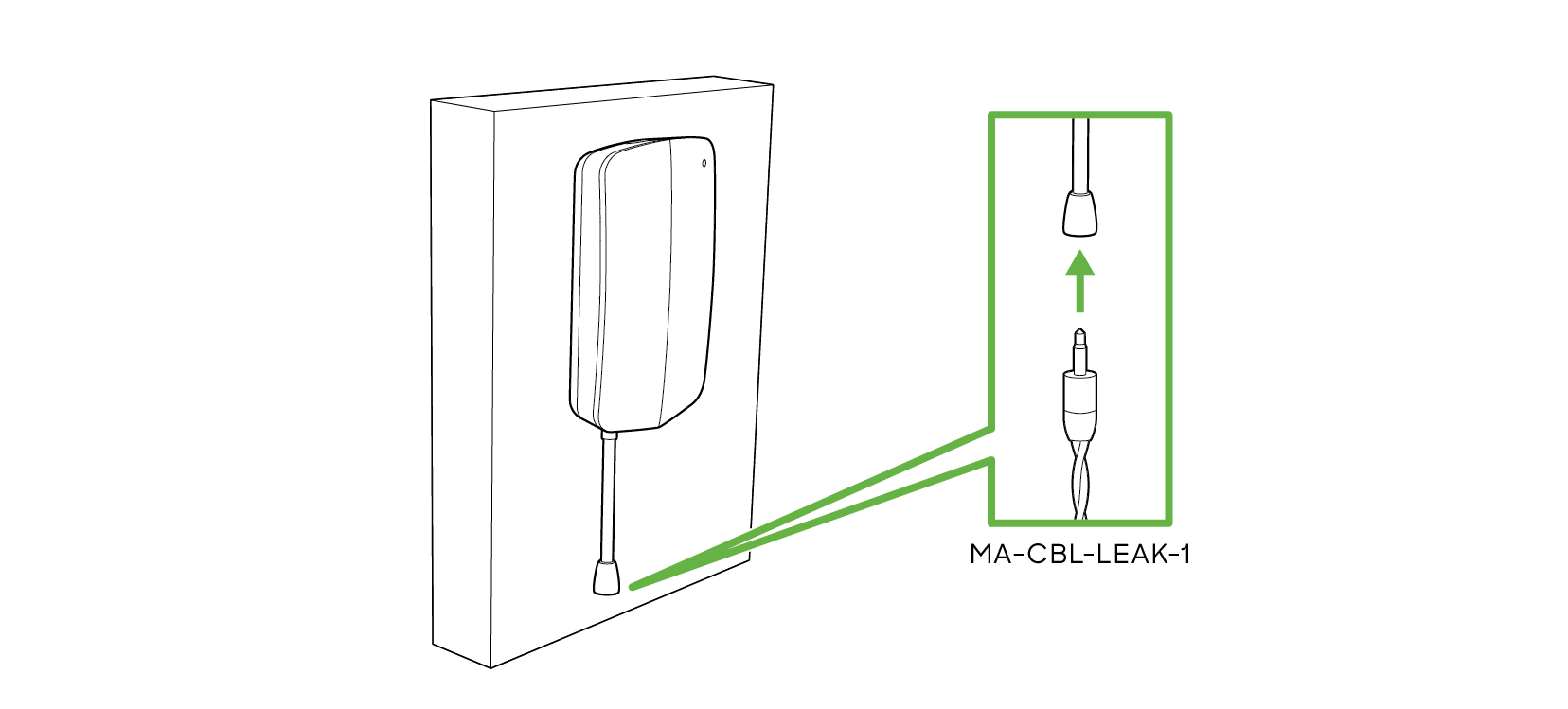
There should be a ‘click’ when the cable fully seats, with nearly no space between the ground sheaths of the male and female ends of the connectors
Cable Detected as Wet
- Ensure the cable is undamaged and has had sufficient time to dry out from the last wet event. The cable detects as wet with as little as 3 ml of water. If the cable becomes fully submerged, drying out fully may take a considerable amount of time, especially if water enters the female end of the water detection cable.
- If an external USB-C power supply is used to power the MT, the sensor will continuously alternate between wet and dry states. Refer to MT-1324 for further details.
Troubleshooting MT20 open or close sensor issue
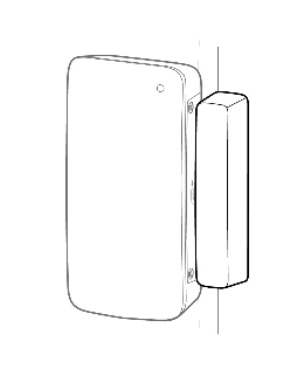
The MT20 open/close sensor may report unexpected states, including device tampering alerts or always showing as "Open" even when the door is physically closed.
Troubleshooting steps
For device tampering
- Confirm you are using the included magnet bar.
- Confirm the gap between the MT20 and the magnet bar does not fall below 5 millimeters (0.5 cm).
For device always reporting as "Open"
Confirm all of the following conditions are true when the door is physically closed:
- The magnet bar is within 5–20 millimeters (0.5–2 cm) of the MT20 magnet symbol.
- The magnet bar is parallel to the MT20.
- The magnet symbols on the MT20 and magnet bar are facing each other.
For instructions on how to properly mount the MT20 and magnet bar, refer to the MT20 Installation Guide.